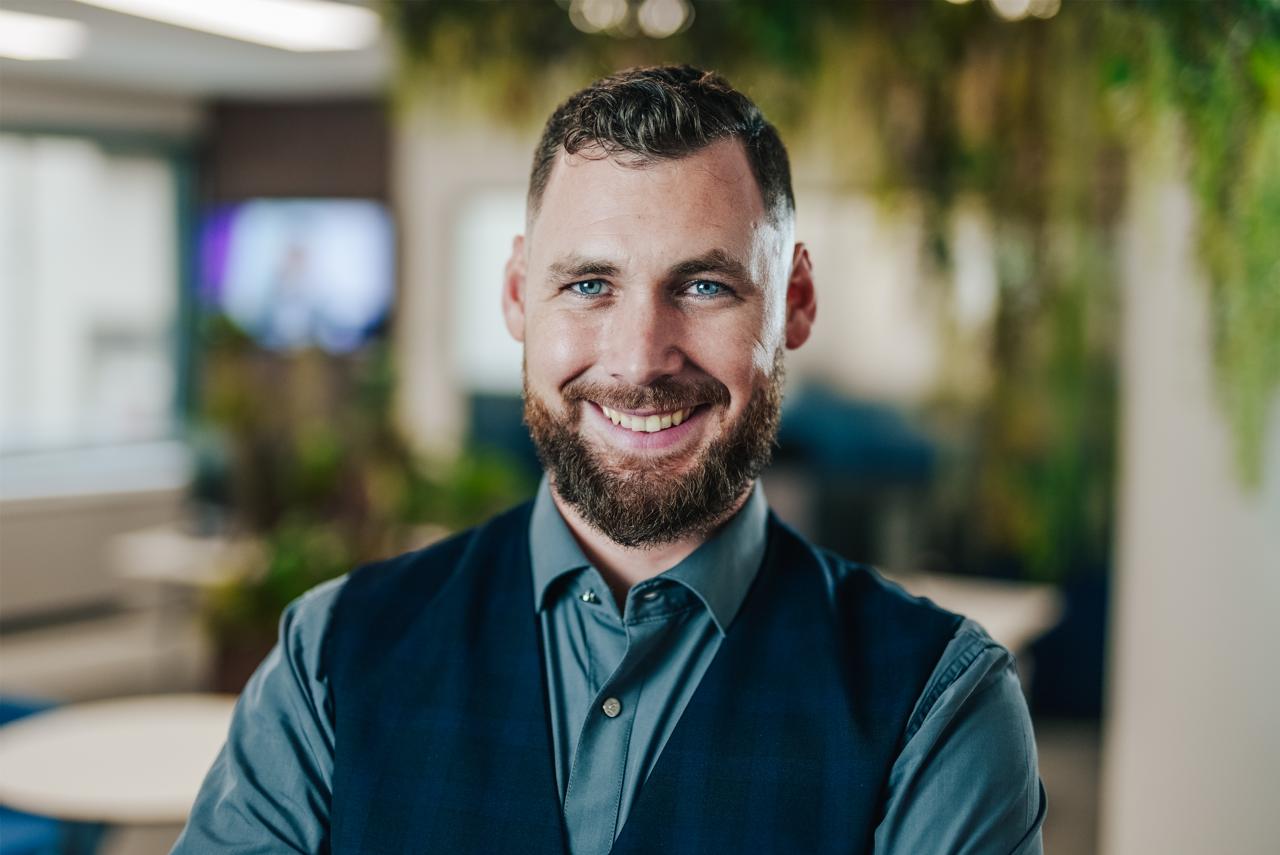
I bridge executive AI ambition and delivery reality.
Most companies know they should do something meaningful with AI. What they usually do not have is a clear answer to what is worth doing, why now, how it should be built, and how success will be measured. That is the work.
§ 002 Completed · 05-2026
A €2M+ Agentic AI program delivered for one of the largest regulated enterprises in Europe.
Served as AI Solution Architect through the MVP phase, then as Agentic AI Platform Solution Owner through Hardening and Productionalization — overseeing ~40 deliverables and ~120 enterprise-grade platform requirements from MVP to production in five months. Open-source stack. Deployed on the client's own infrastructure. 100% client-owned — memory, tools, skills, and knowledge retained inside the business.
§ Stack & deliverables — Open source · client-owned · no vendor lock-in
Cloud & data
- Azure
- Databricks
Models & agents
- OpenAI
- Anthropic
- LangGraph / LangChain
- Open-weight models
MLOps & platform
- MLflow
- Crossplane
- Control Tower
- Agentic Golden Standard
- Platform Operating Model
Security & risk
- AI Threat Modelling
- Penetration Testing
- Internal Risk
- Compliance Readiness
Flagship engagement · Completed May 2026 · Full details protected by NDA
§ 003 Positioning
Enterprise AI
Architect.
My role is to help companies move from scattered AI use cases toward a client-owned Agentic AI ecosystem — one that retains memory, tools, skills, and knowledge inside the business and can be evolved internally rather than rented from someone else's architecture. Tech-to-Value is the discipline; enterprise AI is where it currently matters most.
- 01 What is actually worth doing
- 02 Why now
- 03 How should it be built
- 04 How will we know it is working
§ 004 How I work
AI is not a presentation layer. It is an operating capability.
I do not treat AI as theatre. I treat it as something that has to justify itself economically and architecturally inside the real constraints of the business. On the engagement, that means driving six things in parallel.
Technical execution
Keeping technical teams moving, unblocked, and integrated end-to-end — from data and platform to models and agents.
Architecture alignment
Data, platform, model, and agent architecture pulling the same direction, with deliberate build-versus-buy judgment.
Stakeholder unity
Business, IT, security, risk, and procurement aligned on the same scorecard and the same definition of done.
Cybersecurity tollgates
Security gates built inside delivery — threat modelling, pen testing, and design review — not a final-mile surprise.
Internal risk
Operational and model risk identified and addressed early, mapped to business impact rather than generic AI taxonomies.
Governance, risk & compliance
GRC designed into the system — auditability, accountability, and regulatory posture — and sustained as the platform scales.
§ 005 A distinctive point of view
The strongest long-term position is not using AI tools. It is a client-owned AI ecosystem.
An Agentic platform running on client infrastructure — with client-owned memory, tools, skills, and knowledge — that the company can evolve internally rather than rent from someone else's architecture. The arc runs from isolated AI use cases, to an Agentic platform, to an ecosystem that compounds.
Ownership
Memory, tools, skills, and knowledge retained inside the business — not behind a vendor's API or reset with every contract renewal.
Judgment
The answer is not always custom infrastructure. The role is to judge when build, buy, or hybrid creates the best value-to-risk ratio.
Durability
Capabilities the company can govern, audit, and scale over time — evolvable internally, not dependent on any single vendor's roadmap.
§ 006 Where this work fits best
The profile of a well-matched engagement.
| Dimension | Criteria |
|---|---|
| Best fit | Mid-size and larger companies with serious AI ambitions and real operating constraints |
| Leadership need | Stronger AI prioritization, sharper build-versus-buy judgment, and clearer next moves |
| Environment | Regulated or risk-aware operating contexts where governance and auditability matter |
| Working style | Executive clarity with architectural discipline underneath — no theatre, no lock-in |
| Methodology | Scaled Agile (SAFe) certified — comfortable in PI planning, large-solution, and portfolio-level contexts |
| Engagement geography | London, Berlin, Amsterdam and adjacent European timezones — remote by default, in-person for PI planning or similar moments where physical presence clearly adds value |
§ 007 Next step
If that is the conversation you want to have, let us talk.
Start with the challenge, the objective, or the AI decision that currently feels stuck. The point is not to force a large program early. It is to identify the right first move.